Personal Numbers and Lo Shu Compatibility: Attraction and Tension
Learn how the personal number in the Lo Shu system reflects your core energy and how it interacts with another person's number to create attraction, harmony, or productive tension.
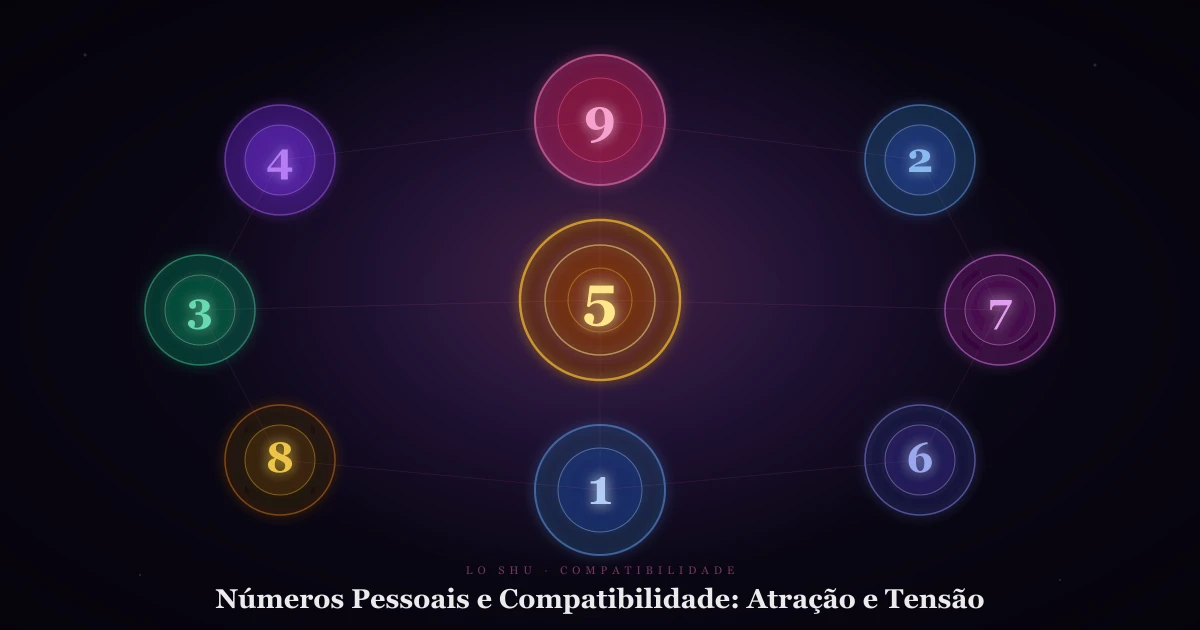
Within the Lo Shu system, the personal number — also called the central number or birth year number — is one of the most revealing elements for understanding compatibility. While the complete grid shows the detailed map of resources and absences, the personal number captures the energetic essence of a person: their dominant vibration, their way of relating to the world and to others.
What the Lo Shu Personal Number Is
The Lo Shu personal number is calculated from the birth year and follows the 9-year cycle of the system. It represents the person's natal energetic position within the great cycle — the starting point from which they see the world. Each number from 1 to 9 has characteristic qualities, challenges, and ways of relating.
The 9 Numbers and Their Relational Energies
- 1 (Water): deep, intuitive, reserved. Relates best with those who respect their inner space.
- 2 (Earth): caring, diplomatic, sensitive. Seeks harmony and may struggle with direct conflict.
- 3 (Young Wood): creative, expansive, optimistic. Needs partners who support their growth.
- 4 (Mature Wood): stable, hardworking, methodical. Values commitment and long-term building.
- 5 (Central Earth): adaptable, communicative, magnetic. The most versatile — can relate to all numbers.
- 6 (Metal): perfectionist, responsible, nurturing. Seeks partners who share their high standards.
- 7 (Metal): spiritual, analytical, introspective. Needs space for reflection within the relationship.
- 8 (Earth): ambitious, practical, determined. Complements well with those who balance the energy.
- 9 (Fire): charismatic, generous, visionary. Attracts many, but needs partners who anchor their energy.
Attraction Patterns in Lo Shu
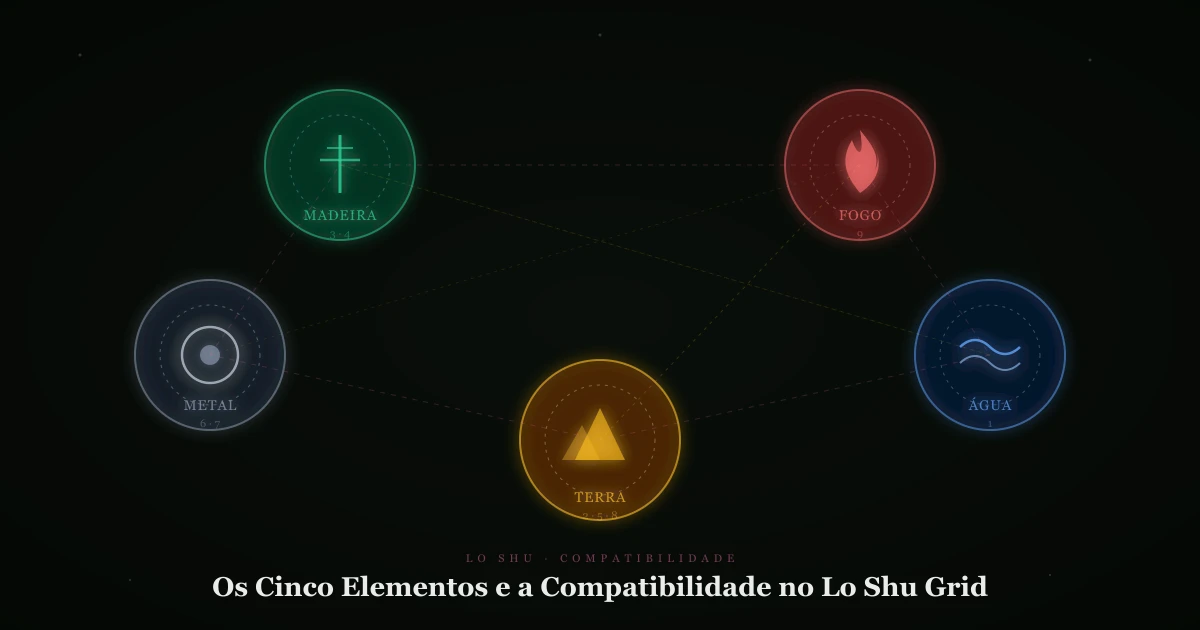
Certain numbers have a natural affinity based on the Five Elements. Numbers belonging to the same element or to elements that nourish each other tend to create relationships of greater ease and flow. For example, 3 and 4 (both Wood) share similar values. 1 (Water) feeds 3 and 4 (Wood), creating a natural support relationship.
Productive Tension Patterns
Numbers from elements that control each other in the Five Elements cycle — such as Metal (6, 7) and Wood (3, 4), or Water (1) and Fire (9) — can create tension. But tension is not incompatibility. Often, these are exactly the relationships that generate the most growth, as each partner challenges the other to expand beyond their comfort zones.
Number 5: The Wildcard of Compatibility
The number 5 occupies the center of the Lo Shu grid and therefore has natural access to all directions and energies. People with personal number 5 tend to adapt well to any other number — they are like energetic bridges. However, this versatility also means they need clarity about their own identity to avoid getting lost in their partner's energies.
How to Use This Analysis
- Calculate your personal number and your partner's.
- Identify the elements corresponding to each number.
- Check whether the elements nourish, control, or are neutral toward each other.
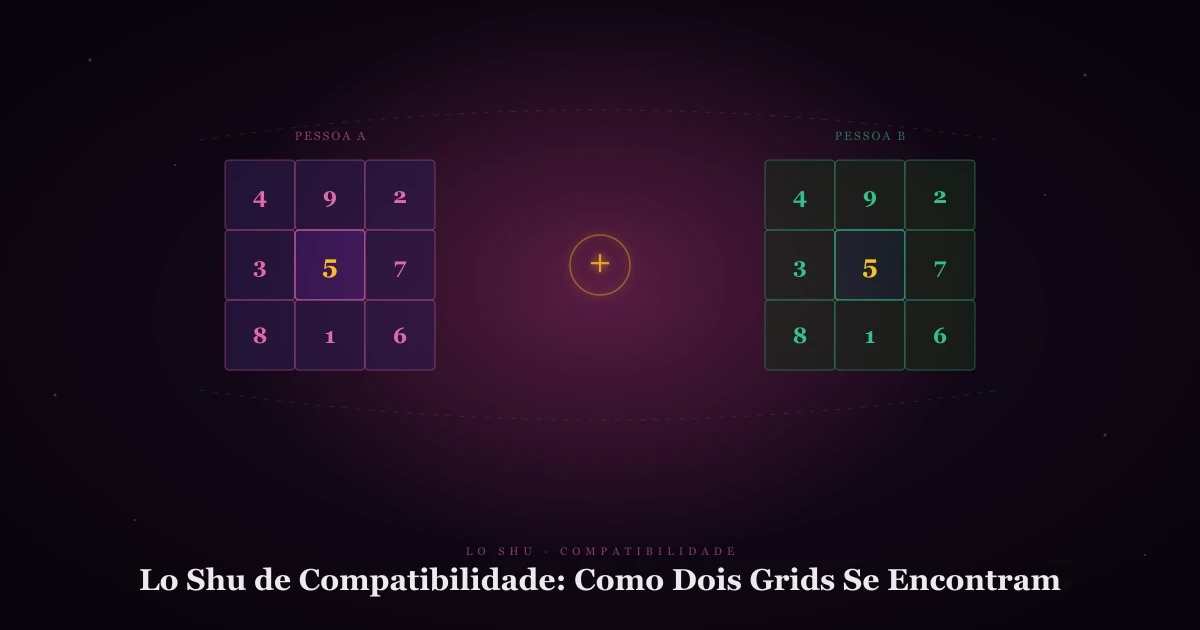
- Analyze the complete grids to see more specific complementarities.
- Remember that the personal number is a starting point, not a sentence.
Analyzing Lo Shu personal numbers opens a fascinating conversation about why we feel attracted to certain people and tensioned by others. More than predicting compatibility, it teaches us something about ourselves — about what we seek and what we offer in any relationship.
About the Author: Kelwin Felipe
Creator of Astro Lúdico, software developer and independent researcher in Cabalistic Numerology, dedicated to translating ancestral wisdom into practical and intuitive tools for self-knowledge.
Related Articles
Notice: The content on Astro Lúdico is for informational and educational purposes only, based on symbolic systems such as numerology and the Major Arcana. It does not constitute medical, psychological, legal, or financial advice. Tool results should be interpreted as reflections on symbolic energetic patterns, not as absolute truths.