Tree of Life: Cosmic Structure and the 10 Sefirot of Kabbalah
Understand the sacred channels of manifestation and how the divine geometry of the Kabbalistic Tree of Life connects to your numerological map and spiritual journey.
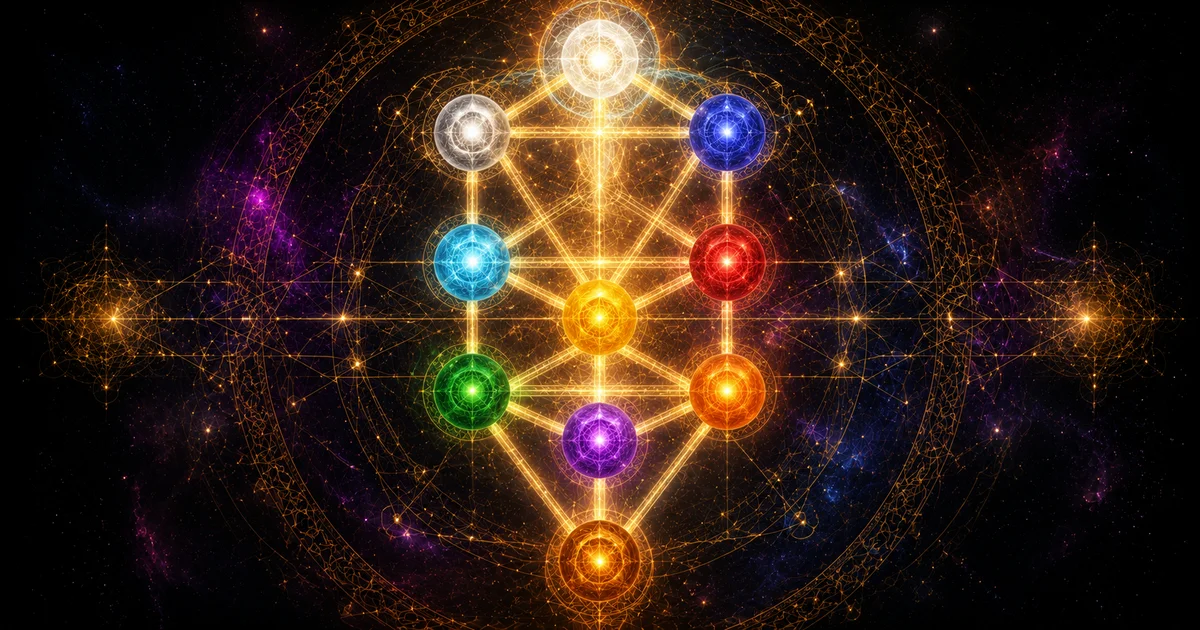
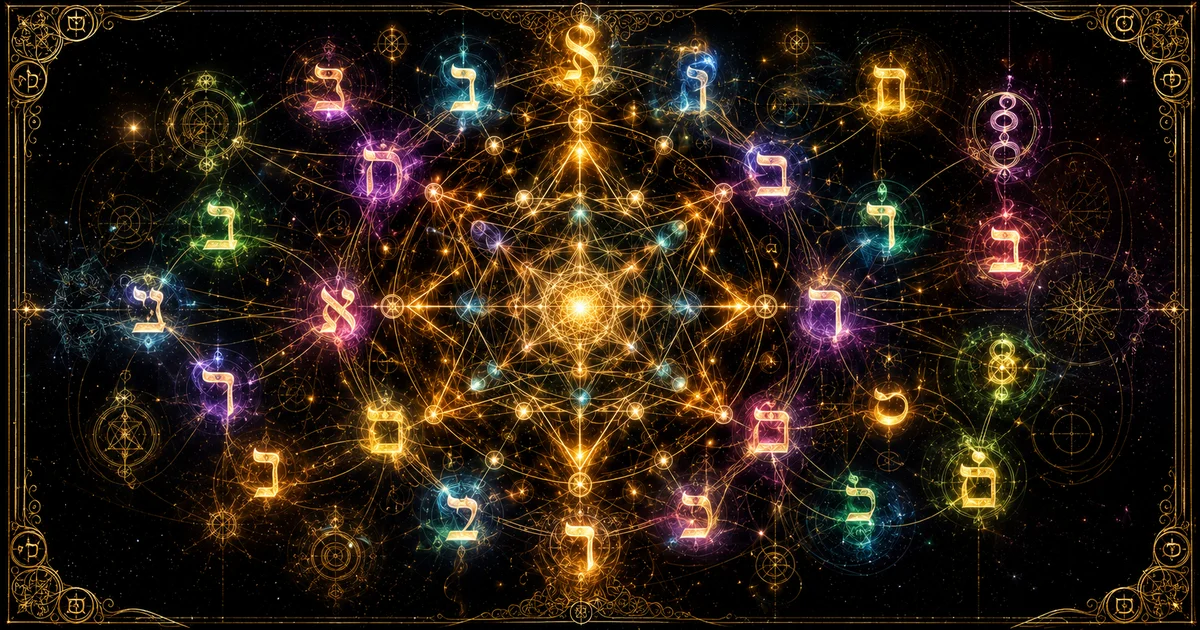
The Tree of Life is one of the most enduring symbols in Western mysticism. Rooted in Kabbalistic tradition and refined across centuries of Jewish, Christian, and Hermetic scholarship, it describes the structure through which the infinite divine light (Ein Sof, the limitless) steps down into the finite world of form and matter. The Tree maps ten divine emanations, called Sefirot, connected by twenty-two sacred paths. Those twenty-two paths correspond directly to the twenty-two letters of the sacred 22-letter alphabet, and, in the numerological tradition developed from Kabbalah, to the twenty-two vibrations that form the foundation of a complete personal map. Understanding the Tree of Life is not a detached philosophical exercise. It is a practical guide to reading the deepest layer of meaning encoded in your own numbers.
The Origin: Ein Sof and the First Emanation
Before the Tree, there is Ein Sof, the infinite, the boundless, that which has no beginning and no end. Ein Sof cannot be directly known, described, or experienced by finite beings. But it can manifest through a structured descent. The Tree of Life is the map of that descent: the sequence of divine qualities that emerge as the infinite makes itself accessible to the finite.
The first emanation, Keter, is not yet a divine attribute in any recognizable sense. It is pure will, the first impulse of existence, the seed before the flower, the desire to be before there is anything to be desired. From Keter, through a precise sequence of relationships, all of creation unfolds. The Tree is not a historical account of what happened once, it is a description of what is always happening, at every level of reality, including the level of your own inner life.
The Three Pillars: Polarity and Balance
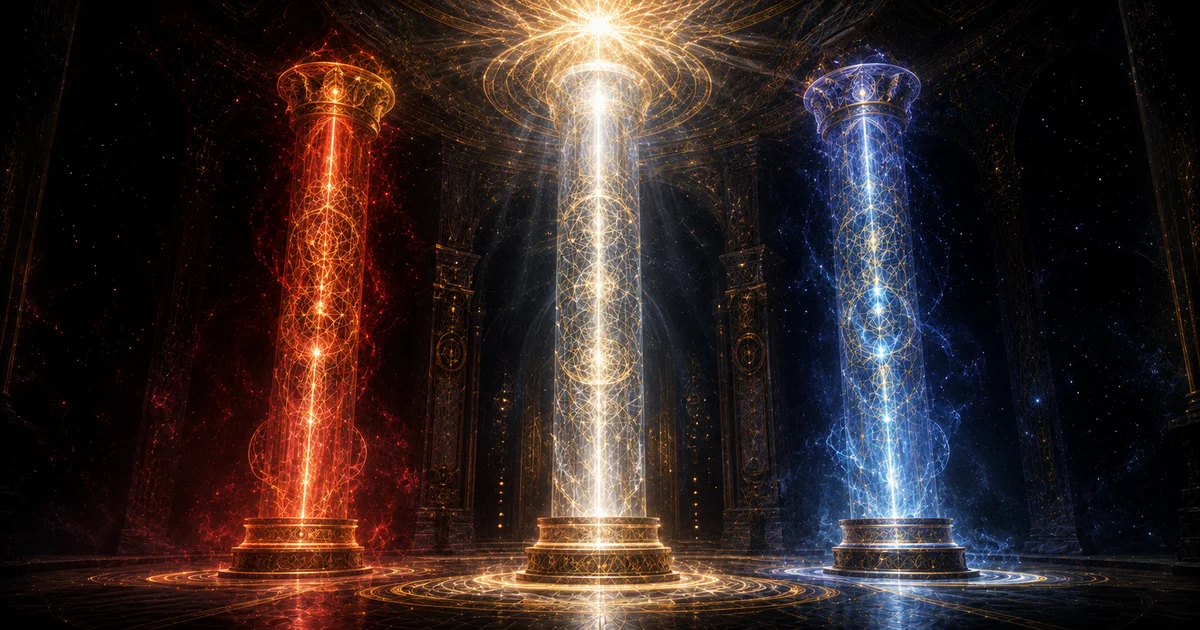
The Tree is organized around three vertical pillars. The right pillar (the Pillar of Mercy) carries the expansive, giving, outward-moving energies. Chokhmah, Chesed, and Netzach stand on this pillar: the flash of wisdom, the unconditional generosity of love, and the passionate impulse of desire and creativity. This pillar does not limit, it pours out.
The left pillar (the Pillar of Severity) carries the contracting, bounding, inward-holding energies. Binah, Gevurah, and Hod stand here: the great mother who gives form to the formless, the power of judgment and discipline, and the precise intellect that analyzes and communicates. This pillar does not expand, it structures.
The central pillar (the Pillar of Balance) integrates both. Keter at the top, then Tiferet at the heart, then Yesod as the channel into matter, and finally Malkuth as the material world itself. The central pillar is not a compromise between the other two, it is a third force that arises when mercy and severity are held in creative tension. In human terms, it represents the soul's authentic path: neither overgiving nor over-restricting, neither reckless nor rigid.
The Four Worlds: Levels of Reality
The Tree operates across four worlds, each representing a level of reality at which the divine light is active. Atziluth, the World of Emanation, is the realm of pure divine will, closest to Ein Sof, essentially identical with it. Beriah, the World of Creation, is where the divine archetypes take shape as distinct qualities and intentions. Yetzirah, the World of Formation, is the realm of emotion, imagination, and subtle energy, where thoughts begin to take form before entering matter. Assiah, the World of Action, is the physical world of time, space, and sensory experience.
This four-world model is not merely cosmological. It maps directly onto human psychology: the body (Assiah), the emotional and imaginative life (Yetzirah), the mind and its concepts (Beriah), and the spark of pure spirit or will (Atziluth). When a number appears in your numerological chart, it is active at all four levels simultaneously, it describes something about your body, your emotions, your thoughts, and your deepest spiritual orientation.
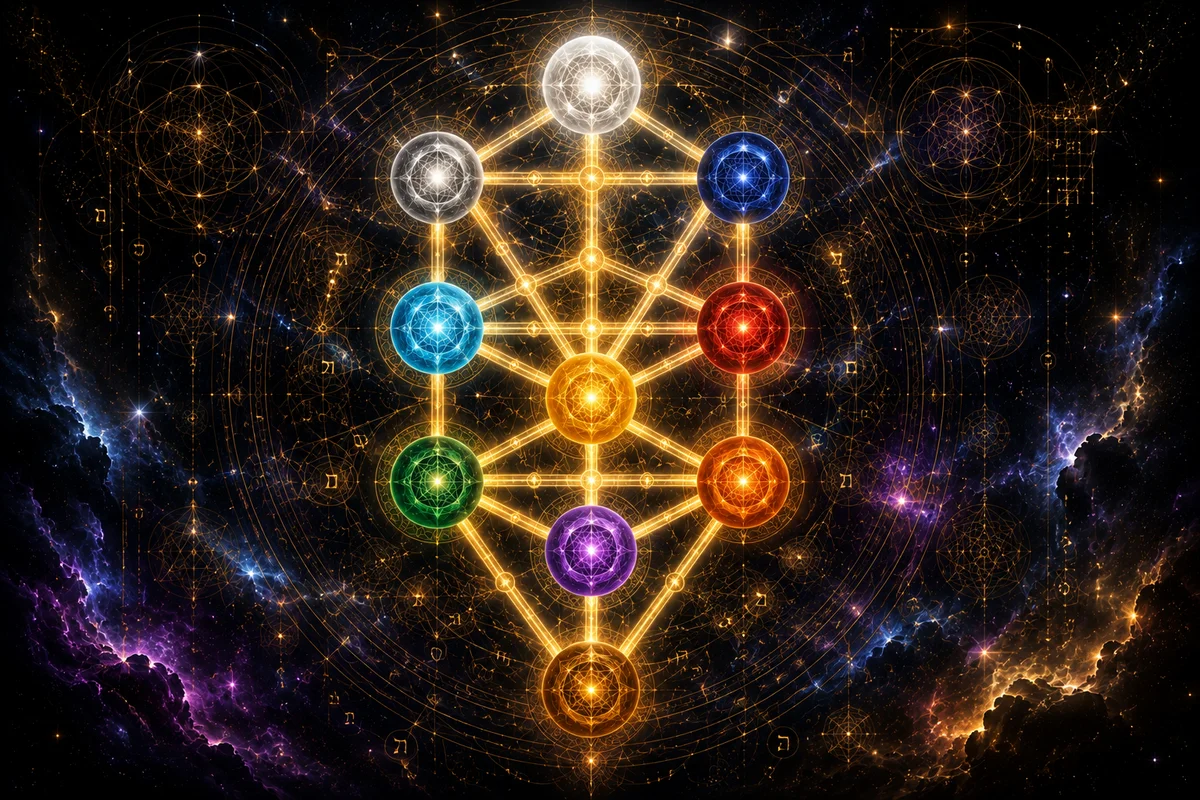
The 10 Sefirot: A Complete Guide
Keter: The Crown
Keter is the first and highest Sefirah. It represents pure will before any specific intention, the drive to exist, to create, to become. In numerology, its vibration corresponds to the energy of the unit: the beginning, the first cause, the undivided. People with a strong Keter vibration in their chart carry an extraordinary capacity for initiative and originality, but may struggle with the loneliness of being the one who sees what others cannot yet see. Keter's challenge is grounding the infinite into something communicable.
Chokhmah: Wisdom
Chokhmah is the first flash of divine intelligence, raw, undirected, spontaneous. It is the seed of all potential before it takes form. Unlike the structured understanding of Binah, Chokhmah does not analyze or organize, it simply illuminates. In numerological terms, it carries the vibration of the first masculine principle: outward-moving, inspirational, generative. Those whose charts align strongly with Chokhmah are natural visionaries who see the whole before the parts, often struggling to explain what they know because the knowledge arrives faster than language.
Binah: Understanding
Binah is the great mother, the womb of form, the divine feminine that receives the lightning-flash of Chokhmah and gives it structure. She is the force that transforms raw inspiration into organized thought, that turns the seed into the tree. Binah is associated with time, limitation, and the gift of boundaries, because without boundaries, nothing can take form. In numerological readings, the Binah vibration appears in those who are natural builders: people who know how to take a vision and make it real, step by patient step.
Chesed: Loving-Kindness
Chesed is the fourth Sefirah and the first below the invisible upper triad. It represents unconditional love, expansive generosity, and the protective force that provides without limit. Chesed builds, preserves, and blesses. Its vibration in numerology is associated with those who give abundantly and lead through service. The shadow of Chesed is excess, giving without discernment, protecting in ways that enable rather than empower.
Gevurah: Strength and Judgment
Gevurah is the necessary counterforce to Chesed. Where Chesed gives without limit, Gevurah draws the boundary. It is the force of righteous judgment, disciplined power, and the courage to cut away what is harmful or false. Gevurah in its highest expression is not cruelty but precision: the surgeon's scalpel, the teacher's honest assessment, the leader's difficult decision. In numerological charts, a strong Gevurah vibration often appears in people who were born to enforce standards and who struggle when surrounded by lack of accountability.
Tiferet: Beauty and Harmony
Tiferet is the heart of the Tree, the central point where all forces meet and find their natural proportion. It is associated with beauty not as aesthetics but as harmony: the quality that arises when every element is exactly in its right place. Tiferet governs the soul's true identity, not the persona constructed for the world (Chesed's domain) nor the disciplined self that enforces its standards (Gevurah), but the authentic core that neither over-extends nor over-restricts. In numerological readings, Tiferet corresponds most closely to the soul's comfort zone in the Destiny Matrix: the vibration where the person feels most genuinely themselves.
Netzach: Victory and Eternity
Netzach is the realm of emotion, desire, beauty, nature, and artistic impulse. Where Tiferet holds the center, Netzach moves outward through feeling and sensation. It governs the instinctual side of life: the pull of attraction, the joy of creating, the feeling of being moved by something beyond reason. In numerological practice, a strong Netzach vibration often indicates a person for whom emotional truth is the primary compass, someone who must feel something before they can commit to it.
Hod: Splendor
Hod is the counterpart to Netzach on the left pillar: where Netzach flows and feels, Hod analyzes and communicates. It governs language, commerce, systems, and the mind's capacity to break complex wholes into understandable parts. Hod is the domain of the writer, the scientist, the merchant, and the magician, all of whom use precise language and structured thinking to work with the world's patterns. A strong Hod vibration in a chart indicates someone who learns by articulating, who thinks through explaining.
Yesod: Foundation
Yesod is the great channel, the funnel through which all the energies of the upper Sefirot are collected, distilled, and passed into material manifestation through Malkuth. It corresponds to the subconscious mind, to the cycles of the moon, to dreams, and to the emotional body that mediates between spirit and matter. In numerological readings, Yesod's vibration governs cycles, rhythms, and the hidden emotional infrastructure of a person's life. When Yesod is flowing clearly, higher intentions translate smoothly into action. When it is congested with unprocessed emotion or unconscious pattern, even the clearest intentions stall before reaching the material world.
Malkuth: The Kingdom
Malkuth is the final Sefirah, the material world itself, the body, the Earth, the domain of sensory reality. It is the destination of the divine light's entire descent: the point at which the infinite becomes visible, tangible, and experienced directly. Malkuth is not the lowest or least important Sefirah, it is the culmination. All the qualities of the nine Sefirot above it are present in Malkuth, just expressed through matter and form. The person whose chart is strongly aligned with Malkuth energy is here to work with the physical world: to build, to tend, to embody spiritual principles in concrete, practical form.
The 22 Paths and Their Connection to Numerology
Between the ten Sefirot run twenty-two paths, each corresponding to a letter of the sacred 22-letter alphabet and a Major Arcana of the Tarot. These paths are the channels of transit and transformation, the specific routes through which energy moves between the divine stations. Every number from 1 to 22 in Kabbalistic numerology describes one of these stations or paths.
Numbers 1 through 10 correspond to the Sefirot themselves, the divine stations. Numbers 11 through 22 correspond to the connecting paths, the channels of movement and change. This is why Kabbalistic numerology preserves numbers above 9 rather than always reducing to a single digit: a number like 14 (Temperance, the path between Gevurah and Chesed) describes a completely different energetic reality than 5 (Chesed itself). Reducing 14 to 5 would erase the specific quality of the journey between judgment and mercy that the number 14 encodes.
How the Tree Maps Your Inner Life
When you look at your numerological chart through the lens of the Tree, the numbers cease to be personality descriptors and become coordinates on a sacred map. Your Expression Number tells you which Sefirot or path your soul is here to embody outwardly, how you are meant to move through the world and serve. Your Soul Number reveals the Sefirot or path that drives you from within, the quality your soul most deeply longs to experience and express. Your Personal Year number tells you which station is currently most active in your journey, which quality of the Tree is being emphasized in this particular cycle of your life.
When you feel torn between giving and holding firm, between compassion and judgment, you are experiencing the Chesed-Gevurah tension, the fundamental polarity of the Tree. When your vision is clear but your life does not seem to reflect it, the channel through Yesod into Malkuth may need attention: the subconscious patterns and emotional foundations through which all higher light must pass before it reaches the material world. The Tree does not explain these dynamics as psychological quirks, it situates them within the architecture of divine manifestation itself, which changes the quality of the attention you bring to resolving them.
Practical Steps for Working with the Tree
You do not need to memorize the entire Kabbalistic system to benefit from the Tree's perspective. A few practical entry points: Identify your most active numbers in a Kabbalistic numerology reading (Expression, Soul, first vowel, Personal Year) and look up their corresponding Sefirot or paths. Read a brief description of each and ask: where is this quality strong in my life? Where is it absent or in shadow?
Notice which pillar each of your active Sefirot falls on. If most of your numbers are on the Pillar of Mercy, you may be naturally generous but struggle with boundaries. If most are on the Pillar of Severity, you may be disciplined but find it hard to open fully. If most are on the central pillar, you carry a natural gift for integration, but may feel the weight of always being the one who holds the middle ground.
The Tree of Life is not a system to master in a single reading. It is a companion for a lifetime of inquiry, a structure so richly layered that every time you return to it with new experience, it shows you something it could not show you before. Your numerological map is a key to that structure. The numbers in your chart are not coincidences. They are coordinates on the oldest map of inner space that the Western world has ever produced.
About the Author: Kelwin Felipe
Creator of Astro Lúdico, software developer and independent researcher in Cabalistic Numerology, dedicated to translating ancestral wisdom into practical and intuitive tools for self-knowledge.
Related Articles
Notice: The content on Astro Lúdico is for informational and educational purposes only, based on symbolic systems such as numerology and the Major Arcana. It does not constitute medical, psychological, legal, or financial advice. Tool results should be interpreted as reflections on symbolic energetic patterns, not as absolute truths.